
Politics
Subsidy Debate Deepens as FG, APC Reject Atiku’s 2027 Proposal

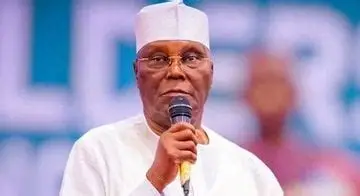
The Federal Government and the All Progressives Congress have rejected former Vice President Atiku Abubakar’s proposal to reintroduce petrol subsidy if elected president in 2027, insisting that returning to the policy could reverse the economic reforms of the Bola Tinubu administration.
The fresh disagreement emerged on Sunday, with APC National Chairman, Prof Nentawe Yilwatda, and Minister of Information and National Orientation, Mohammed Idris, separately defending the decision to remove petrol subsidy and questioning the sustainability of Atiku’s proposal.
President Tinubu announced the removal of the subsidy in his inaugural address on May 29, 2023, arguing that the regime had become too costly for the country. His administration has since maintained that the resources previously committed to subsidising petrol should instead be redirected towards infrastructure, education, healthcare, social intervention and job creation.
Atiku, who is the presidential candidate of the African Democratic Congress, has taken a different position ahead of the 2027 election, saying he would restore subsidy under a targeted and transparently funded arrangement.
His proposed model, contained in his Economic Recovery Plan 2027, would involve providing qualifying domestic refineries with crude oil at preferential prices under strict conditions in an attempt to reduce petrol prices while encouraging local refining.
Atiku has also demanded an account of the savings from subsidy removal, arguing that Nigerians have yet to see sufficient benefits from the policy.
Responding to the proposal, Yilwatda described the former vice president’s position as a “deeply troubling policy U-turn,” questioning how such a programme would be financed without recreating the fiscal difficulties that preceded the subsidy removal.
“Economic policy cannot be reduced to election-season promises. Nigerians deserve to know precisely where the money will come from, what sectors will bear the cost and whether such a policy can be sustained without reopening the fiscal pressures that necessitated reform in the first place,” Yilwatda said.
Speaking during a visit to the headquarters of the City Boy Movement in Abuja, the APC chairman argued that although the subsidy removal had imposed hardship, reversing it would not provide a sustainable solution.
He said the focus should instead be on strengthening social interventions and productive sectors while allowing the reforms to deliver their intended benefits.
Yilwatda also urged Nigerians to examine the economic programmes of all presidential candidates ahead of 2027 rather than being persuaded by policies designed primarily to secure electoral support.
The APC chairman’s position was echoed by Idris, who said the removal of subsidy had expanded the resources available to the three tiers of government.
According to the minister, the Federal Government’s Reform Scorecard showed that subsidy savings generated N15.8tn for the federation between June 2023 and December 2025.
He said the Federal Government received about N5.43tn, while states and local governments received approximately N6.52tn and N3.88tn respectively.
Idris, however, explained that the figure did not represent money kept in a separate account but resources released into the broader fiscal system for distribution among the different levels of government.
He said the additional funds had helped states and local governments meet salary and pension obligations while supporting infrastructure and essential services.
At the federal level, Idris said, the increased fiscal space had helped finance strategic infrastructure, human capital development and social programmes.
He cited approximately N6.47tn in additional expenditure on strategic infrastructure covering areas such as transportation, housing, agriculture and security.
The minister also said more than 10 million households had benefited from social transfers, while over N400bn had been committed to programmes including the Nigerian Education Loan Fund, the MOFI Real Estate Investment Fund and the Nigerian Consumer Credit Corporation.
Idris further warned that reversing the subsidy reform could undermine developments in Nigeria’s petroleum industry, particularly as domestic refining capacity continues to expand.
“The renewed call for the restoration of petrol subsidy under any guise demands a clear-eyed examination of what Nigeria has gained from reform and what the country would have to surrender by reversing course,” he said.
He recalled that Nigeria spent about $10bn on fuel subsidies in 2022, even as crude oil production was declining and government revenue was under pressure.
According to him, the subsidy regime had increasingly diverted resources that could have been deployed to sectors such as education, healthcare, infrastructure and social protection.
The minister warned that returning to the previous system could also encourage fuel scarcity, arbitrage and further fiscal pressure.
He said the Federal Government’s Reform Scorecard projected that without the reforms, petrol shortages could have returned, with black-market prices potentially exceeding N3,000 per litre.
Idris also cited the legacy Ways and Means financing, which stood at about N30tn in May 2023, saying it could have risen to N60tn or more if the previous policy framework had continued.
He further drew attention to electricity subsidies, saying the country spent another N3.14tn on electricity consumption subsidies between June 2023 and December 2025.
Against that backdrop, the minister questioned whether the country could afford to restore petrol subsidy while continuing to finance other subsidies.
“Do we restore petrol subsidy, or sustain student loans and consumer credit for young Nigerians? Do we restore subsidy, or preserve higher allocations to states and local governments? Do we restore subsidy, or continue funding roads, rail, power and security?” Idris similarly asked.
He acknowledged that the reforms had not eliminated all the country’s economic difficulties, but argued that abandoning them would not resolve the problems created by the transition.
“We are not claiming that the reforms have solved all of Nigeria’s economic challenges; there is indeed still much work to be done to translate improved fiscal capacity into better services, jobs, infrastructure and living standards.
“But the proper response to the hardship associated with reform is not to dismantle the reform; it is to accelerate the benefits,” the minister said.
“We have moved beyond that model,” he added.
Atiku fires back
Atiku, however, intensified his criticism of the administration’s economic policies in a statement issued by his Senior Special Assistant on Public Communication, Phrank Shaibu.
He described the celebration of subsidy removal by the Tinubu administration as “one of the biggest economic frauds being sold to Nigerians.”
The ADC candidate argued that the government could not reject intervention designed to cushion the impact of rising living costs while offering tax credits and other incentives to major investors in the petroleum sector.
His position was summed up in his statement: “You cannot subsidise capital and criminalise relief for citizens. You cannot offer cushions upstairs and call suffering downstairs.”
Atiku also questioned the government’s petroleum-sector incentives, citing the Deep Offshore Oil and Gas Projects Incentives framework.
“Under Tinubu’s own Deep Offshore Oil and Gas Projects Incentives framework, qualifying petroleum developments can receive production tax credits beginning at $3 and $4.50 per barrel, with supplementary credits capable, in qualifying circumstances, of taking the combined benefit to as much as $11.50 per barrel,” he said.
He argued that government intervention could not be considered sound policy when it reduced risks for investors but was rejected when directed at households facing higher transportation, food and energy costs.
“So, what exactly is Tinubu’s objection: government intervention itself, or government intervention for Nigerians?” he asked.
Atiku also questioned what happened to the savings supposedly generated by the removal of subsidy, citing figures contained in the Nigerian National Petroleum Company Limited’s financial statements.
He claimed that NNPCL recorded about N4.84tn in energy-security expenses and related shortfalls in 2023 and approximately N7.13tn in 2024.
“Where exactly did the subsidy go? If Nigerians were paying market prices because ‘subsidy is gone,’ why was the federation still carrying trillions of naira in under-recovery and energy-security costs?” he said.
Atiku maintained that the terminology used to describe such government expenditure should not obscure its economic impact.
“Nigerians do not eat semantics. Whether government calls it subsidy, under-recovery, shortfall or energy security, public resources were being used to bridge a gap between economic cost and the price at which petrol was sold,” he added.
He argued that the consequences of subsidy removal had been particularly severe for households and businesses, with higher petrol prices affecting transportation, food costs, production expenses and household budgets.
Atiku accused the administration of applying “brutally savage capitalism” to poor Nigerians while pursuing “compassionate capitalism for big oil money operators.”
“The government can protect a multibillion-dollar oil investment from risk, yet it says protecting the Nigerian worker from crushing hardship is bad economics,” Atiku said.
He added that the government could not “roll out the red carpet for rich oil operators while leaving its citizens to walk barefoot through hardship.”
The subsidy controversy is expected to remain a major issue ahead of the 2027 presidential election, with the ruling party defending the reform as necessary for fiscal sustainability and the opposition arguing that its social and economic costs have become too heavy for Nigerians to bear.
Kindly contact us @ info[@]wordspired.com.ng
Call or Whatsapp: +234 803 951 2443, +234 705 759 7144








2027: Oyewumi, Olaoluwa, Fadipe, other Accord Candidates Doubtful

Zamfara Assembly Stable, Functional Despite Defectors’ Distractions, Says Speaker Moriki

INEC Announces October 9 Start for Nationwide PVC Collection Ahead of 2027 Elections

INEC Sets Simultaneous Voting as Key Target for 2027 General Elections

Anambra Govt Accuses Obi of Undermining APGA, Urges Voters to Reject Him


 News6 years ago
Omar Bolaji Gambari: The new Mr. Fix It in Aso Rock?
 News7 years ago
You are in trouble, Shekau threatens Chadian President Idris Deby
- News6 years ago
Dutch top football league may be cancelled
- Entertainment6 years ago
Afro fusion act TYMZY set to excite music fans with debut collection
- Entertainment6 years ago
Saidi Balogun’s latest movie White/Funfun hits the market, making waves on YouTube
- News6 years ago
Maryam Onikijipa-Belgore: Living an Impactful Life for the Downtrodden
- News6 years ago
“Ego is the major problem affecting Yoruba race” – Oba Frederick Akinruntan
- Metro6 years ago
Super cop, Yinka Egbeyemi distributes COVID-19 palliatives, turns heat on Lagos hoodlums