
Opinion/Commentaries
Dual Loyalty and Political Sabotage: The Case for Urgent Presidential Intervention in the Wike-Fubara War

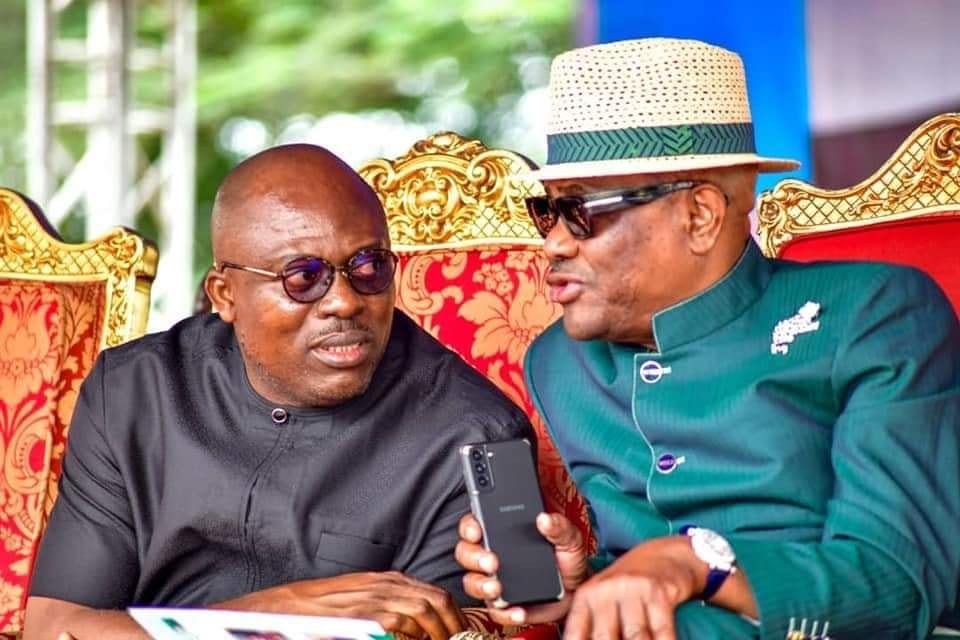
The political landscape of Rivers State has moved beyond mere friction into the territory of a full-blown constitutional crisis. On Thursday, January 8, 2026, the state witnessed a seismic shift as 26 members of the House of Assembly, led by Speaker Martins Amaewhule, initiated impeachment proceedings against Governor Siminalayi Fubara and his deputy, Ngozi Oduh.
This is not merely a local dispute; it is a stress test for Nigerian democracy, a battle for the soul of the “Treasure Base of the Nation,” and a direct challenge to the authority of the Presidency.
The Impeachment Gambit: Orchestration or Accountability?
The speed and coordination with which Majority Leader Major Jack presented the notice of “gross misconduct” suggest a process driven more by political calculation than legislative oversight. When 26 members of a 32-seat house align so swiftly against an executive, it rarely signals a spontaneous discovery of illegality. Instead, it points toward a scripted maneuver intended to decapitate the state’s leadership.
The charges of “misconduct” remain vague, yet the implications are clear. By targeting both the Governor and the Deputy, the Assembly is effectively attempting to create a leadership vacuum, a move that threatens to plunge a state responsible for a significant portion of Nigeria’s oil revenue into administrative paralysis.
The Wike Factor: The Perils of Dual Loyalty
At the heart of this storm stands Nyesom Wike, the Minister of the Federal Capital Territory. Wike’s role in this crisis is as anomalous as it is destabilizing. Despite serving in President Tinubu’s cabinet, his shadow looms over the Rivers State House of Assembly, where his loyalists hold sway.
An X-ray of Propriety and Motive
- The Preservation of Power: For Wike, Rivers State represents his primary source of political leverage. To lose control of the state’s structure is to become a “general without an army” in the federal capital.
- The “Two Gates” Paradox: As Senator Fadahunsi recently noted, Wike is attempting to “guard two gates”—the PDP structure in Rivers and an influential seat in an APC administration. This duality is inherently unstable.
- Destabilization as Strategy: By keeping the Fubara administration under the constant threat of impeachment, Wike ensures that the Governor remains too busy fighting for survival to build an independent political base. However, the cost of this strategy is the total stagnation of governance in Rivers.
The Fubara Defection: Why the APC Must Act
Governor Fubara’s recent move to the All Progressives Congress (APC) has fundamentally altered the stakes. He is no longer an “opposition” governor; he is a sitting governor of the ruling party.
If President Bola Tinubu and the APC leadership allow a member of their own party to be ousted by a legislative group widely believed to be taking orders from a Minister who officially remains a member of the PDP, it sends a message of profound weakness. It suggests that the APC cannot protect its own and that “godfatherism” trumps party membership and executive immunity.
The Necessity of Presidential Intervention
President Tinubu cannot afford to view this as a “family affair” or a distant state matter for several reasons:
- Economic Security: Rivers State is the heartbeat of Nigeria’s oil economy. Prolonged unrest here directly impacts the national budget and foreign investor confidence.
- National Stability: A state as volatile as Rivers, if left to burn, can easily export its instability to neighboring Niger Delta states, reigniting militancy and civil restiveness.
- The Precedent of Order: Allowing a legislature to be used as a personal weapon for a former governor to settle scores with a successor sets a dangerous precedent that could be replicated across the 36 states, leading to national political anarchy.
Conclusion: Beyond the Brink
The crisis in Rivers is no longer just about Fubara or Wike; it is about whether the rule of law or the rule of “the godfather” will prevail. President Tinubu must move beyond the role of a mediator and act as a decisive National Leader. The reintroduction of fiscal discipline—perhaps through the re-centralization of the FCT’s finances as suggested by governance groups—and a firm directive to the FCT Minister to focus on his mandate are necessary first steps.
Rivers State cannot be left to continue in this cycle of crisis. The “Treasure Base” deserves a government focused on development, not a theater of war where the citizens are the ultimate casualties.
Kindly contact us @ info[@]wordspired.com.ng
Call or Whatsapp: +234 803 951 2443, +234 705 759 7144










Zamfara Targets Cleaner Transport as Lawal, Federal CNG Initiative Explore Green Mobility Hub

2027: PDP Backs Senator Olubiyi Fadeyi Ajagunla for Osun Central, Ends Accord Alliance

Administrative Fee for Passport Application in UK Sacrosanct for Applicants – Diplomatic Expert Kingsley Chukwu Reveals

Transport Workers Endorse Gov Lawal for Second Term for Improving Infrastructure in Zamfara

US Delivers Military Equipment to Nigeria to Boost Counter-Terrorism Operations


 News6 years ago
Omar Bolaji Gambari: The new Mr. Fix It in Aso Rock?
 News6 years ago
You are in trouble, Shekau threatens Chadian President Idris Deby
- News6 years ago
Dutch top football league may be cancelled
- Entertainment6 years ago
Afro fusion act TYMZY set to excite music fans with debut collection
- News6 years ago
Maryam Onikijipa-Belgore: Living an Impactful Life for the Downtrodden
- Entertainment6 years ago
Saidi Balogun’s latest movie White/Funfun hits the market, making waves on YouTube
- News6 years ago
“Ego is the major problem affecting Yoruba race” – Oba Frederick Akinruntan
- Metro6 years ago
Super cop, Yinka Egbeyemi distributes COVID-19 palliatives, turns heat on Lagos hoodlums