
Opinion/Commentaries
AMUPITAN: ADC and Its Digital Mob Justice

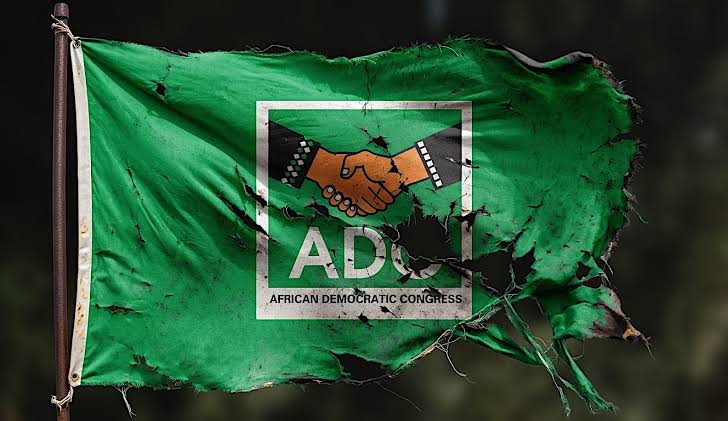
Nigeria’s opposition politics has taken a troubling turn—one that raises serious questions not just about leadership, but about responsibility, credibility, and the growing culture of digital mob action.
At the centre of the storm is the African Democratic Congress (ADC), a party now entangled in a web of internal disputes, legal battles, and what critics describe as a dangerous resort to scapegoating. But more alarming is how that internal crisis has spilled into the public space—mutating into a full-blown online campaign targeting the Chairman of the Independent National Electoral Commission (INEC), Joash Amupitan.
Crisis Within, Chaos Without
ADC’s troubles did not begin with INEC. They are deeply rooted in a fierce internal power struggle, with allegations that the party has been effectively commandeered by political heavyweights such as David Mark, Rauf Aregbesola, Atiku Abubakar, and Rotimi Amaechi.
This perceived takeover has sparked outrage among founding members, triggering lawsuits from figures like Nafiu Gombe and Leke Abejide. In an unprecedented twist, even state party structures have fractured, with some chairmen rejecting both contending factions outright.
The result is a party at war with itself—fragmented, leaderless, and struggling to define its own identity.
INEC’s Role—and the Backlash
Amid the confusion, INEC stepped in—not to take sides, but to perform its statutory duty. Acting in compliance with a Court of Appeal ruling on party leadership, the commission de-recognised the faction led by Senator David Mark, while also refusing to recognise that led by Nafiu Gombe until the substantive suit before the Federal High Court sitting in Abuja is determined.
But instead of resolving the dispute, this move ignited outrage within the ADC.
Suddenly, the focus shifted. Instead of addressing the internal breakdown, party actors turned their fire on Prof. Amupitan, accusing him—without credible evidence—of partisanship and demanding his resignation.
For legal experts, the accusation is fundamentally flawed.
Read also: Oyo State People Will Be Glad to Have Barr Akeem Agbaje as Their Gov in 2027
“INEC does not manufacture leadership for political parties. It recognises what the law and the courts affirm,” a constitutional analyst explained. “If ADC is divided and the court settles a matter, INEC has no option but to comply.”
Rise of Digital Mob Justice
If the political attacks were not enough, the situation took a darker turn online.
Supporters aligned with elements of the opposition—particularly segments of the Obidient Movement—have been accused of orchestrating aggressive digital campaigns against Prof. Amupitan.
In what many describe as a disturbing trend, fake social media accounts allegedly created in his name began circulating posts that bear no resemblance to the measured voice of a legal scholar and Senior Advocate of Nigeria (SAN).
For observers, this is more than politics—it is mob justice in its digital form.
A media rights advocate warned:
“Impersonation and coordinated misinformation campaigns are not activism—they are attacks on institutional integrity. Today it’s INEC; tomorrow it could be any democratic institution.”
Buck Passing as Strategy
The unfolding drama reveals a deeper issue within Nigeria’s opposition ecosystem: a persistent culture of deflection.
Rather than confront internal failings—leadership tussles, ideological confusion, and structural weakness—there is a tendency to externalise blame. INEC becomes the villain. The referee becomes the scapegoat.
But this strategy may come at a heavy cost.
A political analyst summed it up:
“You cannot build credibility by attacking institutions every time you lose internal control. Parties must first govern themselves before aspiring to govern a nation.”
The Amupitan Factor
Ironically, those targeting Prof. Amupitan are confronting a figure widely regarded within legal and academic circles as disciplined, methodical, and grounded in due process.
His handling of the ADC matter—anchored in legal compliance—reflects the very principle INEC is expected to uphold: neutrality under the law.
Yet, in the current climate, neutrality itself has become suspect—especially when it does not favour one side.
A Test for the Opposition
As Nigeria inches closer to the 2027 elections, the ADC crisis offers a cautionary tale.
A party divided against itself cannot present a united front. A movement driven by outrage rather than organisation risks burning out before it even reaches the ballot.
And a strategy built on digital mob justice may win temporary attention—but it erodes long-term credibility.
The real question, then, is not about INEC. It is not even about Prof. Amupitan.
It is about whether the ADC—and indeed Nigeria’s broader opposition—can move beyond chaos, confront its internal contradictions, and rebuild on the foundations of discipline, law, and democratic maturity.
Until then, the noise may continue—but the substance will remain elusive.
Kindly contact us @ info[@]wordspired.com.ng
Call or Whatsapp: +234 803 951 2443, +234 705 759 7144













Gov Lawal Flags Off 94km Tsafe Road Network to Boost Agriculture and Security in Zamfara

Ajaero Accuses Tinubu Administration of Poor Engagement with Labour

Julius Agwu Reveals Brain Surgery Left Him With Sexual Health Complication

APC Faults Amaechi’s Claim Over Mother’s Medical Expenses

Lakurawa Fighters Attack Sokoto Community, Police Confirm


 News6 years ago
Omar Bolaji Gambari: The new Mr. Fix It in Aso Rock?
 News6 years ago
You are in trouble, Shekau threatens Chadian President Idris Deby
- News6 years ago
Dutch top football league may be cancelled
- Entertainment6 years ago
Afro fusion act TYMZY set to excite music fans with debut collection
- Entertainment6 years ago
Saidi Balogun’s latest movie White/Funfun hits the market, making waves on YouTube
- News6 years ago
Maryam Onikijipa-Belgore: Living an Impactful Life for the Downtrodden
- News6 years ago
“Ego is the major problem affecting Yoruba race” – Oba Frederick Akinruntan
- Metro6 years ago
Super cop, Yinka Egbeyemi distributes COVID-19 palliatives, turns heat on Lagos hoodlums