
Opinion/Commentaries
ADC’s Pyrrhic Victory: Supreme Court Ruling That Could Doom the Party’s 2027 Dreams

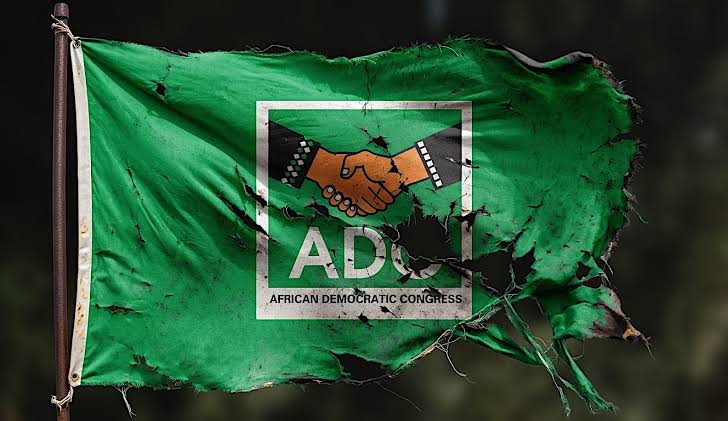
In a dramatic twist that had party insiders popping champagne on Thursday, April 30, 2026, the Supreme Court delivered what looked like a lifeline to the David Mark-led faction of the African Democratic Congress (ADC). The apex court set aside the Court of Appeal’s “status quo ante bellum” order that had prompted INEC to de-recognise Mark and his team, including Rauf Aregbesola as national secretary.
The unanimous judgment, read by Justice Mohammed Garba, declared the preservative directive “unnecessary, unwarranted and improper” once proceedings had advanced. For a fleeting moment, it felt like vindication for the high-profile coalition that had taken over the party after the resignation of former national chairman Ralph Okey Nwosu in July 2025. Mark’s camp hailed it as affirmation of their leadership structures, with figures like former Vice President Atiku Abubakar publicly welcoming the outcome as a step toward building a formidable opposition force against the ruling APC ahead of 2027.
But peel back the headlines, and this “victory” carries the whiff of an albatross around the ADC’s neck. Rather than delivering a final knockout, the Supreme Court ordered all parties back to the Federal High Court for full hearing and determination of the substantive leadership dispute. The core issues — who legitimately controls the party, the validity of transitions, and the authority to run congresses and conventions — remain unresolved, now destined for more months (or years) of litigation at the trial court level.
The Factional Free-for-All
The ADC’s woes trace back to that July 2025 leadership vacuum. Nwosu and some executives stepped aside, paving the way for an interim setup with Mark as national chairman and Aregbesola as secretary. This move, backed by a coalition of opposition heavyweights, was meant to reposition the party as a credible platform. Instead, it ignited a multi-headed rebellion.
Today, the party is fractured into at least three rival factions:
The David Mark-led group, which held a national convention in April 2026, elected new executives, amended the constitution, and expelled rivals. This faction positions itself as the authentic, reformed ADC ready for 2027.
The Nafiu Bala Gombe faction, which claims continuity with the pre-transition executive and has challenged the “hijack” in court. Bala and allies, including House of Representatives member Hon. Leke Abejide (Yagba Federal Constituency, Kogi), argue the Mark takeover bypassed due process and party constitution.
A third bloc linked to the party’s 2023 presidential candidate, Dumebi Kachikwu, which has rejected both major camps and thrown its weight behind de-recognition of the Mark leadership.
Tensions boiled over with expulsions: the Mark faction booted Bala, Abejide, and others for alleged anti-party activities. The rivals fired back, rejecting the moves as illegal and staging counter-protests in Abuja. Abejide has publicly accused Mark, Aregbesola, and others of hijacking the party, even vowing to exit if courts ultimately side with them.
This week’s Federal High Court ruling in Abuja, delivered by Justice Joyce Abdulmalik, added fresh fuel. The court restrained INEC from recognising any congresses or conventions conducted by the Mark-led caretaker leadership, upholding the tenure of elected state executives and barring interference. It effectively told the caretaker committee it lacked authority to reorganise the party at state levels under the ADC constitution.
Separately, Abejide’s own suit — seeking to restrain Mark and Aregbesola from parading as leaders and nullifying the July 2025 handover — remains live in court, with earlier dates set for judgment.
The Supreme Court Order and Its Trap
Legal watchers say the Supreme Court’s directive is double-edged. By voiding the status quo order (which had frozen recognition in favour of the pre-Mark setup), it potentially allows INEC to restore the Mark faction on its portal in the short term. But by remitting the entire matter back to the Federal High Court for trial on the merits — including issues of jurisdiction, proper parties, and the validity of the leadership change — the apex court ensured the war is far from over.
The substantive suit, originally filed by elements linked to the Bala/Gombe side, must now be heard fully, with all affected parties put on notice. Appeals could follow any outcome, looping the case potentially back through the Court of Appeal to the Supreme Court again.
Road to 2027: Timelines vs. Courtrooms
Nigeria’s electoral timetable is unforgiving. For a party to field candidates in the 2027 general elections, it needs a recognised, undisputed national leadership to conduct valid primaries, submit nomination lists, and meet INEC deadlines. Prolonged internal litigation has already crippled similar opposition parties in the past, leading to de-recognition risks, parallel structures, and voter confusion.
With multiple suits active — the remitted Federal High Court case, the fresh restraint on congresses, Abejide’s action, and potential fresh challenges — the ADC faces a nightmare scenario: factional executives issuing conflicting directives, INEC sitting on the fence pending “authentic” court pronouncements, and time slipping away. State congresses have already faced disruptions. A full trial, possible appeals, and enforcement battles could easily stretch into 2027, leaving the party unable to organise credible primaries or present unified candidates.
Critics within and outside the party warn that without urgent political reconciliation — setting aside egos and hammering out a compromise outside court — the ADC risks becoming yet another opposition vehicle derailed by its own infighting. Some voices are already eyeing alternatives like the Action Democratic Party (ADP) for coalition-building.
The Supreme Court gave the Mark faction a tactical win by lifting the immediate freeze. Yet by refusing to wade into the merits and sending everyone back to square one at the trial court, it may have handed the party a legal quagmire that no amount of celebratory statements can easily escape.
For a formation that positioned itself as a serious contender to challenge the status quo in 2027, the real battle is no longer just against the APC — it’s against the clock and its own fractured soul. The albatross is firmly in place. Whether the ADC can cut it loose through swift resolution or political realism will determine if it flies or flops spectacularly.
Kindly contact us @ info[@]wordspired.com.ng
Call or Whatsapp: +234 803 951 2443, +234 705 759 7144













TAIWO BABATUNDE HASSAN: A Gentle Giant of the Screen, A Man Of The People, A Legacy That Will Endure

Subsidy Debate Deepens as FG, APC Reject Atiku’s 2027 Proposal

IBD Dende Mourns Passing of Actor Ogogo, Says Ilaro Has Lost One of Its Illustrious Sons

Aare Adetola Emmanuelking Celebrates Damola Aiyeola at 60, Applauds His Contributions to RSSOSA

Lawal Hails Yari’s Appointment as Tinubu/Shettima Campaign DG, Says Zamfara Is Proud


 News6 years ago
Omar Bolaji Gambari: The new Mr. Fix It in Aso Rock?
 News6 years ago
You are in trouble, Shekau threatens Chadian President Idris Deby
- Entertainment6 years ago
Afro fusion act TYMZY set to excite music fans with debut collection
- News6 years ago
Maryam Onikijipa-Belgore: Living an Impactful Life for the Downtrodden
- News6 years ago
Dutch top football league may be cancelled
- Entertainment6 years ago
Saidi Balogun’s latest movie White/Funfun hits the market, making waves on YouTube
- News6 years ago
“Ego is the major problem affecting Yoruba race” – Oba Frederick Akinruntan
- Metro6 years ago
Super cop, Yinka Egbeyemi distributes COVID-19 palliatives, turns heat on Lagos hoodlums