
News
INEC Sets Simultaneous Voting as Key Target for 2027 General Elections

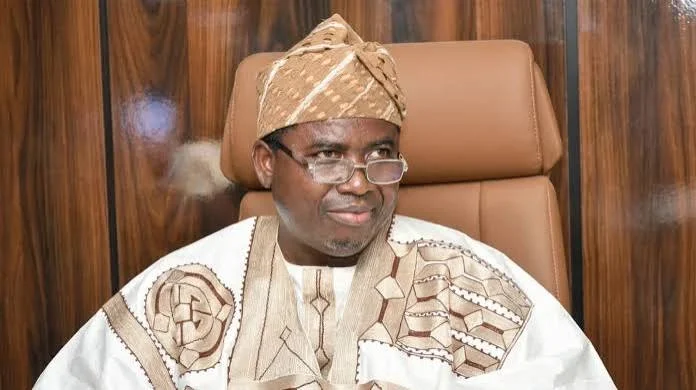
The Independent National Electoral Commission (INEC) has set its sights on ensuring that voting begins at the same time across polling units nationwide during the 2027 general elections.
INEC Chairman, Prof. Joash Amupitan, disclosed this on Monday in Abuja while delivering a keynote address at a strategic workshop for editors organised by the Nigerian Guild of Editors in partnership with the commission.
Amupitan said the commission was applying lessons learnt from recent off-cycle elections to strengthen its logistics, personnel deployment and technological systems ahead of the 2027 polls.
According to him, improving logistics and ensuring that electoral technology functions effectively would be critical to reducing delays and making the voting process smoother.
“So some of those lessons from those elections, right from our technology optimisation, must improve. Our logistics must improve.
“I want to see a general election where voting starts in all the polling units in Nigeria at the same instance. That is what we are targeting, where logistics is well-addressed, and where our technology works optimally,” he said.
The INEC chairman said early procurement and distribution of non-sensitive election materials had already begun, with the materials being sent to state offices.
He also disclosed that new operational pickup vehicles had been procured for state and local government offices to facilitate the movement of electoral personnel and materials.
Amupitan said INEC had commenced zonal readiness assessments across the country, including physical audits and engagements with staff.
He explained that the assessments, already completed in the South-West and North-West zones, were designed to identify local vulnerabilities, test contingency arrangements and address possible operational bottlenecks before election day.
On technology, the chairman said INEC had acquired 57,000 new Bimodal Voter Accreditation System devices.
He said the devices were undergoing software hardening, battery optimisation and biometric calibration as part of efforts to improve their reliability during the elections.
Amupitan added that the enhanced electronic EC8A system would digitise polling unit result sheets, authenticate them cryptographically and facilitate their direct upload to the INEC Result Viewing Portal.
He identified transparent and efficient management of election results as one of the major lessons arising from the challenges that followed the 2023 general elections.
According to him, the commission would ensure that its result-management processes are conducted “effectively, optimally, and transparently,” while declarations are made promptly after the completion of collation.
“Because the only way that can save us in this country from all the problems we’ve had since 2023 is if we manage our results effectively, optimally, and transparently, and then ensure that the results are declared as soon as the work of collation is completed,” Amupitan said.
He said the approach was intended to strengthen transparency and allow citizens to follow the electoral process while reducing the space for suspicion and misinformation.
The INEC chairman also highlighted measures introduced to make voter registration and access to Permanent Voter Cards easier.
He said the commission introduced an online registration portal during the third phase of the Continuous Voter Registration exercise to reduce difficulties associated with distance and time.
Amupitan further disclosed the introduction of printable Permanent Voter Cards in accordance with Section 18(1) of the Electoral Act 2026.
“Apart from that, we also introduced another technology, which is the printable PVC technology in line with Section 18(1) of the Electoral Act, to ensure that waiting becomes a relic of the past,” he said.
According to him, the technology was tested during the Osun governorship election and enabled voters whose PVCs had been stolen before the poll to exercise their franchise.
Amupitan said INEC was 101 days away from the presidential and National Assembly elections scheduled for January 16, 2027, while the governorship and State Houses of Assembly elections would hold on February 6.
He said the commission had completed eight of the 14 major statutory activities contained in its revised timetable and was progressing towards the ninth milestone.
The INEC chairman also urged editors to help promote accurate and responsible election reporting, describing them as the “bridge in an era of information chaos”.
“When newsrooms prioritise factual accuracy over sensational headlines, when reports contextualise field logistics rather than default to inflammatory speculation, and when information is verified before publication, you perform a sacred public service. You act as the primary filter protecting our democracy against information disorder.
“As the nation prepares for the 2027 General Elections, let us work together to build a public space powered by verified facts, civic responsibility, and unassailable institutional trust,” he concluded.
Speaking at the workshop, President of the Nigerian Guild of Editors, Eze Anaba, said media credibility was inseparable from the credibility of the electoral process.
“The credibility of the media is itself an essential component of the credibility of the electoral process. The Nigerian Guild of Editors is committed to working with INEC, and other stakeholders, to promote elections that Nigerians can trust, and a media that the citizens can rely upon for credible information,” Anaba said.
Anaba also raised concerns over the increasing role of the courts in determining electoral outcomes, urging stakeholders to strengthen the electoral system so that citizens’ votes remain the decisive factor.
“There’s a need for us to fight for our electoral process to be fair, transparent, and to avoid courts being the last port of call. People are talking about selectorates these days. People are talking about courts speaking for citizens as a last arbiter for voters.
“But hopefully, with this next round of elections, citizens’ votes will speak. We cannot grow as a democracy without a very strong electoral body.
“The Guild believes strongly that a credible election is a shared responsibility. INEC has its constitutional mandate. Political parties and analysts have their responsibilities. The media has its own obligation, and ultimately, citizens must be adequately informed and empowered to participate in the electoral process,” the NGE President stated.
Kindly contact us @ info[@]wordspired.com.ng
Call or Whatsapp: +234 803 951 2443, +234 705 759 7144











2027: Oyewumi, Olaoluwa, Fadipe, other Accord Candidates Doubtful

Zamfara Assembly Stable, Functional Despite Defectors’ Distractions, Says Speaker Moriki

INEC Announces October 9 Start for Nationwide PVC Collection Ahead of 2027 Elections

INEC Sets Simultaneous Voting as Key Target for 2027 General Elections

Anambra Govt Accuses Obi of Undermining APGA, Urges Voters to Reject Him


 News6 years ago
Omar Bolaji Gambari: The new Mr. Fix It in Aso Rock?
 News7 years ago
You are in trouble, Shekau threatens Chadian President Idris Deby
- News6 years ago
Dutch top football league may be cancelled
- Entertainment6 years ago
Afro fusion act TYMZY set to excite music fans with debut collection
- Entertainment6 years ago
Saidi Balogun’s latest movie White/Funfun hits the market, making waves on YouTube
- News6 years ago
Maryam Onikijipa-Belgore: Living an Impactful Life for the Downtrodden
- News6 years ago
“Ego is the major problem affecting Yoruba race” – Oba Frederick Akinruntan
- Metro6 years ago
Super cop, Yinka Egbeyemi distributes COVID-19 palliatives, turns heat on Lagos hoodlums