News
Tinubu Says World Bank Report Validates Economic Reforms, Points to Poverty Stabilisation

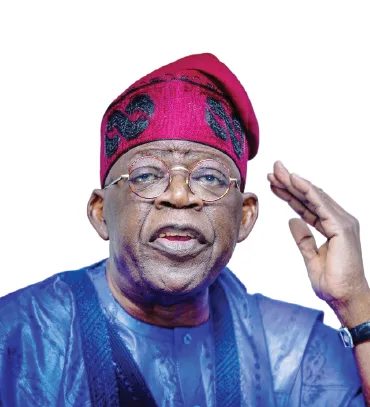
President Bola Tinubu has described the World Bank’s latest Nigeria Development Update as evidence that his administration’s economic reforms are yielding results, citing the stabilisation of the poverty rate for the first time since 2019.
In a statement issued on Sunday by his Special Adviser on Information and Strategy, Bayo Onanuga, the President said the October 2026 report, titled *Beyond the Federal Purse: How Higher Revenues Reshaped State Priorities*, indicated that Nigeria’s economy was becoming better positioned for sustained growth.
Tinubu also welcomed the bank’s projection that poverty would gradually decline as economic growth outpaces population growth.
According to the report, Nigeria’s economy expanded by 4.2 per cent in the first half of 2026, compared with 3.9 per cent in the corresponding period of 2025, despite the economic consequences of the conflict in the Middle East.
The World Bank projected that economic growth would average at least 4.4 per cent between 2026 and 2028.
On inflation, the report recorded a decline from 27.6 per cent in January 2025 to 15.2 per cent in December of the same year. However, higher global fuel prices associated with the Middle East conflict have slowed further progress, although inflation is expected to ease to approximately 12 per cent by 2028.
The report also highlighted improvements in Nigeria’s external position, noting that the current account surplus increased to $12bn, equivalent to 7.0 per cent of gross domestic product, in the first half of 2026, up from $8.6bn in the same period a year earlier.
Similarly, the country’s gross external reserves rose from $45.5bn at the end of 2025 to $53.8bn by the end of August 2026.
The World Bank attributed significant improvements in government revenue to reforms introduced since 2023, reporting a 69 per cent increase in federation revenues in real terms between 2023 and 2025, with state governments emerging as the biggest beneficiaries.
According to the report, state governments channelled some of the additional resources into development, increasing capital expenditure by 151 per cent in real terms over the period. Much of the spending went into roads and other transport infrastructure, agriculture, energy and housing.
The bank further disclosed that 29 of 33 states redirected spending towards economic infrastructure, while real social expenditure per capita increased in all but one state.
Internally generated revenue also grew in real terms in 31 of 35 states, while 21 states reduced their debt-to-GDP ratios between 2021 and 2025.
At the national level, Nigeria’s public debt is projected to decline from 40.0 per cent of GDP in 2025 to 38.1 per cent in 2026.
Reacting to the findings, Tinubu said they demonstrated the impact of the policy decisions taken by his administration since assuming office in 2023.
He said, “the difficult but necessary decisions to remove the petrol subsidy, unify the foreign exchange market and strengthen fiscal discipline have raised revenues, stabilised the economy and created fiscal space for every tier of government to invest in its people.”
While acknowledging the progress recorded, the President stressed that the government must do more to ensure economic improvements translate into tangible benefits for ordinary Nigerians.
“The dividends of reform are becoming visible,” he said, adding, “But more work remains to ensure they fully translate into better living standards for every household, starting with lower food prices and decent jobs for our young people.”
Tinubu reaffirmed his administration’s commitment to continuing the reform programme, declaring that it would “stay the course of reform and redouble its focus on inclusive growth under the Renewed Hope Agenda.”
As part of efforts to cushion the impact of economic adjustments, the President promised to expand targeted cash transfers, which he said had already benefited more than 10 million households.
He also pledged to accelerate the deployment of Compressed Natural Gas, boost agricultural productivity and improve access to affordable healthcare and quality education “so that the prosperity being created is shared by all.”
The President urged state governments to exercise greater responsibility in managing their increased revenues, calling on them to use the resources “more prudently” and concentrate on projects capable of improving residents’ living standards, healthcare and educational opportunities.
He also praised the Economic Management Team, led by the Minister of Finance and Coordinating Minister of the Economy, alongside state governors and other stakeholders, for their cooperation in implementing the reforms.
Reiterating his confidence in the administration’s economic programme, Tinubu said, “I assure Nigerians that the best is yet to come under the Renewed Hope Agenda 2.0, which will accelerate the delivery of shared prosperity for all Nigerians.”
Kindly contact us @ info[@]wordspired.com.ng
Call or Whatsapp: +234 803 951 2443, +234 705 759 7144










Saidi Balogun Applauds Appointment of Shehu Abdullahi, Kenneth Omeruo to City Boy Sports Directorate

Tinubu Inaugurates APC 2027 Campaign Council, Urges Unity, Focus on Governance

Tinubu Says World Bank Report Validates Economic Reforms, Points to Poverty Stabilisation

INEC Warns Nigerians Against Fake Governorship Candidates’ List for Six States

2027: MOUN Kogi West Endorses IDRUFEM for House of Representatives Seat


 News6 years ago
Omar Bolaji Gambari: The new Mr. Fix It in Aso Rock?
 News7 years ago
You are in trouble, Shekau threatens Chadian President Idris Deby
- News6 years ago
Dutch top football league may be cancelled
- Entertainment6 years ago
Afro fusion act TYMZY set to excite music fans with debut collection
- News6 years ago
Maryam Onikijipa-Belgore: Living an Impactful Life for the Downtrodden
- Entertainment6 years ago
Saidi Balogun’s latest movie White/Funfun hits the market, making waves on YouTube
- News6 years ago
“Ego is the major problem affecting Yoruba race” – Oba Frederick Akinruntan
- Metro6 years ago
Super cop, Yinka Egbeyemi distributes COVID-19 palliatives, turns heat on Lagos hoodlums