
Opinion/Commentaries
Nigeria’s Oil Paradox, Institutional Failure at NNPC AND the Rise of Dangote Refinery


By Bello Charles Kolawole, Ph.D
Nigeria’s petroleum industry presents one of the greatest paradoxes in contemporary political economy. A nation richly endowed with vast crude oil reserves has, for decades, struggled to guarantee uninterrupted domestic fuel supply, industrial competitiveness and sustainable economic growth. This contradiction cannot merely be explained by fluctuations in international oil prices or pipeline vandalism. Rather, it reflects decades of institutional weaknesses, governance failures, opaque financial practices and policy inconsistencies that transformed what should have been Nigeria’s greatest economic advantage into one of its greatest developmental burdens.
The Nigerian National Petroleum Corporation, now operating as the Nigerian National Petroleum Company Limited (NNPC Ltd), was established to manage Nigeria’s petroleum resources in the interest of its citizens. Unfortunately, historical evidence indicates that the institution gradually evolved from being an engine of national prosperity into the centrepiece of an inefficient petroleum ecosystem that rewarded import dependence instead of domestic productivity. Recent forensic analyses of Nigeria’s refinery operations have further raised serious questions about the enormous financial commitments made to state-owned refineries despite decades of negligible refining output.
The Collapse of Nigeria’s Refinery Dream
Nigeria’s four state-owned refineries in Port Harcourt, Warri and Kaduna were built with a combined installed refining capacity of approximately 445,000 barrels of crude oil per day. If efficiently managed, these facilities ought to have guaranteed domestic energy security, supported petrochemical industries, created employment opportunities, conserved foreign exchange and accelerated industrial development.
Instead, the refineries became enduring symbols of institutional decay. Successive administrations approved billions of dollars for Turnaround Maintenance, rehabilitation projects and operational support without achieving sustainable refining capacity. Numerous rehabilitation contracts were executed while production remained insignificant or completely absent for extended periods. Consequently, Nigeria continued exporting crude oil only to import refined petroleum products at substantially higher costs.
The real tragedy extends beyond deteriorating infrastructure. It lies in the enormous opportunity cost. Resources that should have financed education, healthcare, power infrastructure, transportation networks, technological innovation and industrial development were repeatedly channelled into facilities that produced little measurable economic value.
The Economics of Institutional Failure
Perhaps the greatest damage inflicted on Nigeria was not merely financial loss but the creation of an economic structure deliberately sustained by refinery failure.
As domestic refining capacity declined, an alternative economy flourished. Petroleum importers expanded their businesses. Crude swap arrangements multiplied. Fuel subsidy obligations increased dramatically. Shipping companies, offshore refiners, storage operators, financial intermediaries and numerous contractors all benefited from a system that depended on Nigeria’s inability to refine its own crude.
Consequently, inefficiency itself became economically rewarding for certain interests, while national productivity deteriorated. Economists describe such situations as rent-seeking economies, where institutional inefficiency generates private wealth at the expense of public prosperity.
The Transparency Deficit
One of the most persistent weaknesses in Nigeria’s petroleum administration has been the absence of operational transparency across the entire crude oil value chain.
Critical questions have remained unanswered. How much crude was allocated to domestic refineries? How much actually reached those facilities? How much was processed? What quantities of refined products were produced and evacuated? Without comprehensive operational reconciliation supported by independent audits, public accountability remains incomplete.
True transparency must go beyond financial reporting. Every barrel allocated for domestic refining should be traceable from production through transportation, refining and final product distribution. Only such transparency can restore public confidence and institutional credibility.
The Fiscal Consequences
The cumulative economic consequences have been enormous.
Nigeria has spent vast sums of foreign exchange importing petroleum products that should have been refined domestically. Fuel subsidy obligations consumed substantial portions of annual public expenditure. Pressure on foreign exchange reserves intensified. Manufacturing competitiveness weakened because of unstable energy costs. Public debt expanded while critical infrastructure lagged behind comparable emerging economies.
Every dollar expended on failed refinery rehabilitation represented a lost investment in schools, hospitals, roads, research institutions, agriculture, technology and national productivity.
Institutional Reform Beyond Corporate Rebranding
The conversion of NNPC into a limited liability company under the Petroleum Industry Act marked an important institutional milestone. However, changing corporate status alone cannot erase decades of governance failures.
Meaningful reform requires transparent operations, merit-based appointments, independent commercial oversight, competitive procurement, periodic forensic audits, measurable performance indicators and strict accountability for public resources. NNPC as an institutions must be judged not by political declarations but by measurable outcomes.
A Commendation for Aliko Dangote’s Strategic Intervention
Amid decades of institutional failure, one development has fundamentally altered the trajectory of Nigeria’s downstream petroleum sector, was the establishment of the Dangote Refinery.
The vision, courage and execution demonstrated by Aliko Dangote deserve national recognition. At a time when many had accepted Nigeria’s dependence on imported petroleum products as inevitable, he undertook one of the largest single private industrial investments in Africa and delivered a refinery capable of transforming Nigeria’s energy landscape.
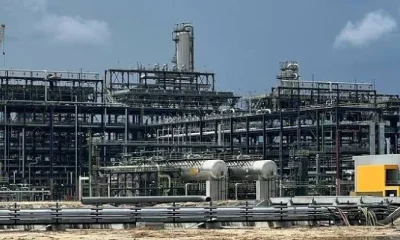
The Dangote Refinery represents more than a commercial venture. It is a strategic national asset with the capacity to strengthen energy security, reduce dependence on imported petroleum products, conserve foreign exchange, stimulate industrialisation, generate thousands of direct and indirect jobs and position Nigeria as a major exporter of refined petroleum products within Africa.
Perhaps its greatest contribution is the lesson it teaches. The refinery demonstrates that Nigeria’s refining crisis was never solely a technical problem. It was fundamentally a crisis of governance, leadership, accountability and execution. Where public institutions struggled for decades despite enormous financial allocations, disciplined private investment delivered tangible results.
This achievement should inspire policymakers to deepen reforms across the petroleum sector by strengthening regulatory institutions, encouraging responsible private sector participation, promoting competition and insisting on transparency and efficiency in the management of national assets.
The success of the Dangote Refinery should not absolve government institutions of their constitutional responsibilities. Rather, it should serve as a benchmark against which future public sector performance is measured.
Lessons for Public Sector Governance
The NNPC experience offers enduring lessons for Nigeria’s governance architecture.
First, natural resource abundance is no substitute for strong institutions.
Second, opaque governance inevitably breeds inefficiency, waste and corruption.
Third, sustainable national development depends more on institutional quality than on resource endowment.
Fourth, visionary leadership, professional management, transparency and accountability remain indispensable foundations for economic transformation.
Finally, Nigeria’s future prosperity will depend upon building institutions whose primary loyalty is to the national interest rather than to entrenched bureaucratic or commercial interests.
Conclusion
Nigeria’s petroleum resources should have financed one of the world’s most remarkable stories of industrial transformation. Instead, decades of institutional weaknesses converted immense natural wealth into fiscal vulnerability, import dependence and lost development opportunities.
Yet the emergence of the Dangote Refinery demonstrates that this trajectory is not irreversible. It provides compelling evidence that with vision, disciplined investment, sound governance and unwavering commitment to execution, Nigeria can build globally competitive industrial infrastructure.
The task before policymakers is therefore not merely to rehabilitate refineries but to rebuild institutions. The future of Nigeria’s petroleum industry depends on transparency, accountability, operational excellence and leadership driven by the public interest.
History will judge institutions not by the resources entrusted to them but by the value they create for the people they serve. Likewise, history will remember those whose vision and courage helped redirect the nation’s economic destiny. The lessons from both NNPC’s failures and the Dangote Refinery’s success should guide Nigeria toward a future where public institutions and private enterprise work together to deliver sustainable national prosperity.
Bello Charles Kolawole, Ph.D, is a public policy analyst, corporate governance expert and researcher with interests in institutional reform, regulatory governance, public finance and sustainable economic development.(08035754442, bcharllykol@yahoo.com)
Kindly contact us @ info[@]wordspired.com.ng
Call or Whatsapp: +234 803 951 2443, +234 705 759 7144













2027: Oyewumi, Olaoluwa, Fadipe, other Accord Candidates Doubtful

Zamfara Assembly Stable, Functional Despite Defectors’ Distractions, Says Speaker Moriki

INEC Announces October 9 Start for Nationwide PVC Collection Ahead of 2027 Elections

INEC Sets Simultaneous Voting as Key Target for 2027 General Elections

Anambra Govt Accuses Obi of Undermining APGA, Urges Voters to Reject Him


 News6 years ago
Omar Bolaji Gambari: The new Mr. Fix It in Aso Rock?
 News7 years ago
You are in trouble, Shekau threatens Chadian President Idris Deby
- News6 years ago
Dutch top football league may be cancelled
- Entertainment6 years ago
Afro fusion act TYMZY set to excite music fans with debut collection
- Entertainment6 years ago
Saidi Balogun’s latest movie White/Funfun hits the market, making waves on YouTube
- News6 years ago
Maryam Onikijipa-Belgore: Living an Impactful Life for the Downtrodden
- News6 years ago
“Ego is the major problem affecting Yoruba race” – Oba Frederick Akinruntan
- Metro6 years ago
Super cop, Yinka Egbeyemi distributes COVID-19 palliatives, turns heat on Lagos hoodlums