
News
FG Makes National Ranking Mandatory for Universities, Polytechnics, Colleges of Education

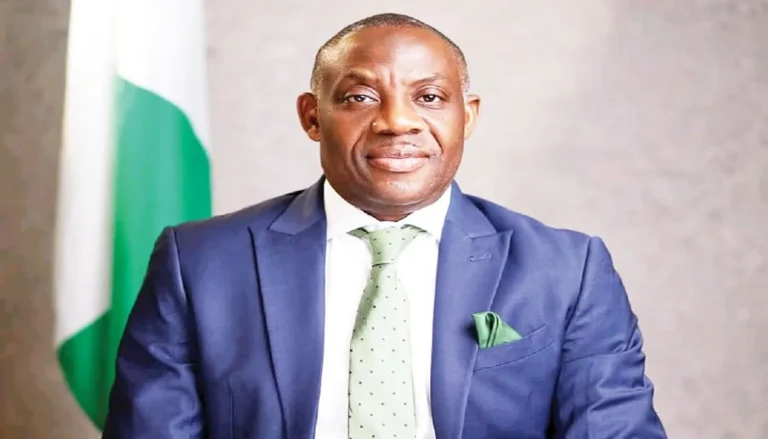
The Federal Government has introduced compulsory participation in Nigeria’s national tertiary institution ranking exercise, extending the initiative beyond universities to include polytechnics and colleges of education across the country.
The Minister of Education, Dr Tunji Alausa, announced the policy on Tuesday in Abuja during a meeting with the Nigerian Universities Ranking Advisory Committee, which has now been expanded and renamed the Nigerian Tertiary Education Ranking Advisory Committee.
According to Alausa, the broader ranking system is aimed at improving “quality, accountability, institutional performance and global competitiveness” throughout Nigeria’s tertiary education sector.
He said the exercise would give institutions “clear benchmarks for assessing their performance, identifying areas requiring improvement and measuring progress,” while also promoting healthy competition among them.
Under the new framework, universities, polytechnics and colleges of education will operate within a unified national ranking system, with funding for the exercise expected to come through the Tertiary Education Trust Fund.
Alausa disclosed that, “The 2026/2027 ranking exercise for universities would commence in September, while the committee would determine the appropriate timeline for extending the exercise to polytechnics and colleges of education.”
He further stated that “the government would develop guidelines to institutionalise the exercise and formally communicate to vice-chancellancellors and heads of other tertiary institutions that participation was compulsory.”
The Education Minister said the initiative formed part of President Bola Tinubu’s wider reforms in the education sector under the Renewed Hope Agenda and the Nigeria Education Sector Renewal Initiative.
He assured stakeholders that the Federal Ministry of Education would provide the necessary “policy direction, funding and capacity-building support” to ensure that the exercise remains credible and sustainable.
Alausa added that the ministry would collaborate with the advisory committee to facilitate “in-service training and institutional capacity-building programmes across tertiary institutions,” with the ultimate goal of helping more Nigerian institutions achieve international recognition.
The Minister of State for Education, Professor Suwaiba Ahmad, also described the initiative as “a significant step towards strengthening accountability and quality across Nigeria’s tertiary education system.”
She said competition among institutions was necessary to encourage continuous improvement and higher educational standards.
“Healthy competition is essential to encouraging institutions to assess their performance, address identified gaps and consistently improve the quality of education they provide,” she said.
Suwaiba stressed that both public and private tertiary institutions would be covered by the ranking system, noting that the exercise would serve as an important mechanism for monitoring and maintaining minimum standards.
She added that it would enable institutions to identify their “strengths and weaknesses” while encouraging measurable progress across the rapidly expanding tertiary education sector.
Meanwhile, the Chairman of the advisory committee, Emeritus Professor Peter Okebukola, said the committee’s engagement with the minister followed an earlier memorandum congratulating the Tinubu administration over the growing international recognition being achieved by Nigerian universities.
Okebukola, a former Executive Secretary of the National Universities Commission, said the committee had also called for increased investment in university education to accelerate the progress already being recorded.
However, he said Alausa expanded the scope of the committee’s original proposal by extending its responsibilities beyond universities to polytechnics and colleges of education.
The decision subsequently led to the transformation of the Nigerian Universities Ranking Advisory Committee into the Nigerian Tertiary Education Ranking Advisory Committee.
Okebukola expressed confidence that “sustained investment, stronger institutional capacity and the new national ranking framework” would help more Nigerian tertiary institutions improve their positions internationally.
He said the initiative would enable Nigerian institutions to “compete confidently with leading institutions globally.”
The new policy comes at a time when Nigerian tertiary institutions are under increasing pressure to improve their performance in international rankings, where research output, academic reputation, citations, international outlook and institutional resources remain major assessment factors.
While more Nigerian universities have recently appeared in global rankings, challenges relating to inadequate funding, weak research capacity, infrastructure deficits and staffing shortages continue to affect their competitiveness.
By extending the ranking framework to polytechnics and colleges of education, the Federal Government hopes to establish a broader and more coordinated system for measuring institutional performance across the entire tertiary education sector.
The compulsory nature of the exercise also represents a significant shift, as institutions will now be expected to participate actively, submit relevant information and measure their performance against nationally established benchmarks.
Kindly contact us @ info[@]wordspired.com.ng
Call or Whatsapp: +234 803 951 2443, +234 705 759 7144




2027: Oyewumi, Olaoluwa, Fadipe, other Accord Candidates Doubtful

Zamfara Assembly Stable, Functional Despite Defectors’ Distractions, Says Speaker Moriki

INEC Announces October 9 Start for Nationwide PVC Collection Ahead of 2027 Elections

INEC Sets Simultaneous Voting as Key Target for 2027 General Elections

Anambra Govt Accuses Obi of Undermining APGA, Urges Voters to Reject Him


 News6 years ago
Omar Bolaji Gambari: The new Mr. Fix It in Aso Rock?
 News7 years ago
You are in trouble, Shekau threatens Chadian President Idris Deby
- News6 years ago
Dutch top football league may be cancelled
- Entertainment6 years ago
Afro fusion act TYMZY set to excite music fans with debut collection
- Entertainment6 years ago
Saidi Balogun’s latest movie White/Funfun hits the market, making waves on YouTube
- News6 years ago
Maryam Onikijipa-Belgore: Living an Impactful Life for the Downtrodden
- News6 years ago
“Ego is the major problem affecting Yoruba race” – Oba Frederick Akinruntan
- Metro6 years ago
Super cop, Yinka Egbeyemi distributes COVID-19 palliatives, turns heat on Lagos hoodlums