News
Defence Minister Signals Gradual Military Withdrawal from Internal Security Operations


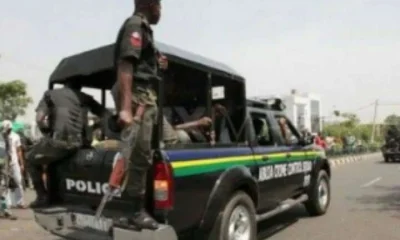
The Federal Government is considering a gradual reduction in the military’s involvement in internal security operations as the Nigeria Police Force expands its operational capacity to take on greater responsibility for maintaining law and order.
Minister of Defence, Gen. Christopher Musa (retd.), disclosed this on Thursday at the APC Abuja Roundtable, where he acknowledged that the armed forces were becoming overstretched by their prolonged deployment across different parts of the country.
Musa said military intervention in internal security was intended to complement police operations when threats exceeded the capacity of the police, but noted that the level of the armed forces’ involvement had become excessive.
“If there are issues that are beyond the police, the military can come in. But the idea is, as you said, it is too much. We are too exposed,” he said.
He explained that the military was currently supporting the police while efforts were being made to improve the force’s manpower and operational capabilities. According to him, the intention is to enable soldiers to gradually return to their primary military responsibilities.
“We’re assisting the police as they are building their capacity. Gradually, we too will start pulling out and going back to the barracks so that we can have time to rest,” he said.
The minister disclosed that he had attended a recent security assessment meeting with police authorities, including the Inspector-General of Police, to examine ways of improving the force’s effectiveness.
“We’re looking at how we can enhance the police, because my men are tired. I can tell you for free,” he said.
He also pointed to ongoing police recruitment as part of the measures expected to strengthen the institution and reduce the need for military deployments in routine internal security operations.
“We feel if they get these things right, there’s no need for the military,” he added.
Musa lamented the strain that prolonged deployments were placing on military personnel, explaining that soldiers were frequently moved from one operational theatre to another, often at the expense of their family lives.
“You will spend two years in one place, then you are moving to the northwest. Sometimes you don’t even see your family. It’s not like they’re enjoying it, but there’s a necessity that we have to be there,” he said.
Beyond the question of military and police responsibilities, the defence minister advocated stronger non-kinetic security measures, including the restoration of tollgates, which he described as useful tools for monitoring movement and improving security.
“I think we made a mistake destroying our toll gates. Tollgates are security measures in place anywhere in the world,” he said.
He equally stressed the importance of comprehensive identity registration, arguing that effective security management required authorities to know and properly document the people within the country.
“It’s like operating a company, and you don’t know your workers. It doesn’t work that way.”
Kindly contact us @ info[@]wordspired.com.ng
Call or Whatsapp: +234 803 951 2443, +234 705 759 7144







Kano Emir Praises Lawal’s Governance Record at Zamfara Mosque Commissioning

Family Accuses Lagos Police of Torture as Barber Dies a Day After Release from 28-Day Detention

2027: Makinde Banks on God, Nigerians, Promises National Reset if Elected President

G-100 Chieftain Declares Opposition Coalition Bid in Crisis, Says Consensus Candidate Plan Has Collapsed

Osun NLC Orders Three-Day Statewide Strike Over Dispute on Local Government Funds


 News6 years ago
Omar Bolaji Gambari: The new Mr. Fix It in Aso Rock?
 News7 years ago
You are in trouble, Shekau threatens Chadian President Idris Deby
- News7 years ago
Dutch top football league may be cancelled
- Entertainment6 years ago
Afro fusion act TYMZY set to excite music fans with debut collection
- Entertainment6 years ago
Saidi Balogun’s latest movie White/Funfun hits the market, making waves on YouTube
- News6 years ago
Maryam Onikijipa-Belgore: Living an Impactful Life for the Downtrodden
- News6 years ago
“Ego is the major problem affecting Yoruba race” – Oba Frederick Akinruntan
- Metro7 years ago
Super cop, Yinka Egbeyemi distributes COVID-19 palliatives, turns heat on Lagos hoodlums