Opinion/Commentaries
Kogi/Okun Power Rotation Summit: A Summit with a Predetermined Outcome?

By Bello Charles Kolawole, Ph.D.
The proposed Kogi/Okun Power Rotation Summit presents an opportunity for Kogi State to have a serious conversation about political equity, inclusion and the rotation of power among its three senatorial districts. However, the timing, promoters and political circumstances surrounding the summit inevitably raise a fundamental question: is this genuinely an open dialogue on power rotation, or is it a political process designed to legitimise an outcome that has already been substantially determined?
The question is legitimate because the issue of political marginalisation of Kogi West, particularly Okunland, is not new. Since the creation of Kogi State in 1991, Kogi West has not produced an elected governor, while Kogi East and Kogi Central have occupied the governorship at different times. Historical accounts also document earlier attempts by prominent Kogi leaders, including Prince Olusola Akanmode and other members of the old Charter of Equity movement, to develop an understanding around political rotation.
The tragedy is that Okunland’s political disadvantage has not always been caused by opposition from outside. At different periods, internal divisions, individual political calculations and the pursuit of personal appointments or access to political power have weakened the collective bargaining position of the Okun people. This is the uncomfortable dimension of what may appropriately be described, in political sociology, as the emergence of political “gluttons” and “scavengers”, actors who prioritise immediate personal political benefits over the longer-term institutional interests of their constituency. The terminology should be understood as a critique of a political culture, not as an allegation against any particular individual without evidence.
Previous generations of Okun political leaders also made compromises which, whether justified by the circumstances of their time or not, eventually left the larger Okun political project without a durable institutional guarantee. Political understandings were sometimes made, alliances were entered into and promises of future consideration were accepted. Yet, as subsequent political developments demonstrated, informal assurances are difficult to enforce once the immediate political transaction has been concluded.
That history makes the present summit particularly sensitive. A power-rotation summit should be about establishing an enduring principle applicable to Kogi East, Kogi Central and Kogi West. It should not become an occasion for asking Kogi West to postpone its aspiration in return for another political assurance whose implementation depends on circumstances that may change after an election.
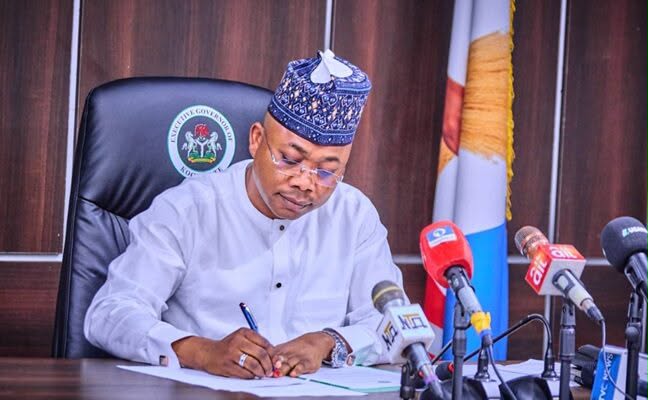
The public controversy surrounding the summit has intensified because some of its promoters and supporters have connected the power-rotation conversation with Governor Usman Ododo’s second-term ambition. Recent reports indicate that advocates of the initiative have argued that Ododo’s second term should be considered within the broader discussion of political rotation. At the same time, critics have questioned whether a summit involving serving government officials and political actors close to the administration can independently determine the future of political power.
This creates the appearance of a predetermined outcome. If the central practical objective is to persuade Okun stakeholders to support the continuation of the incumbent administration in exchange for a future promise of rotation, then the exercise is better understood as a political negotiation than a neutral power-rotation summit. There is nothing inherently wrong with political negotiation, but intellectual honesty requires that it be called what it is.
The question of representation is equally important. Where are some of the respected elder statesmen and professionals who have historically contributed to Okun’s collective political thinking? Personalities such as Prince Olusola Akanmode, Chief Kola Jamodu, Professor Eyitayo Lambo, Chief Bayo Ojo, Eniola Bello, Tunde Ogbeha, Dan Kunle, Prof Mike Ikupolati, Gen Funsho Owonibi, Hon Duro Meseko, Oladele Oyelola, and other accomplished Okun leaders represent considerable national experience. Their previous participation in broad-based Okun initiatives demonstrates the availability of an intellectual and institutional foundation for a more credible conversation.
Their limited visibility in the current initiative raises questions about whether the summit represents a broad Okun consensus or primarily the interests of a particular political network. A new generation of leaders certainly has the right to initiate political conversations, but any gathering claiming to speak for the future of an entire people should deliberately accommodate the old, the young, the professional class, political actors, traditional institutions, women, youth and the diaspora.
There is also a need to distinguish the immediate political aspiration of Kogi West from the longer-term question of power rotation. These are related but not identical questions. One concerns who should have the opportunity to seek the governorship at the next electoral cycle. The other concerns is how Kogi should institutionalise equitable rotation over several electoral cycles. Conflating the two can easily produce a political bargain in which the immediate aspiration of one district is exchanged for an uncertain future promise.
It is against this background that the emerging conversation around Hon. James Abiodun Faleke deserves to be situated carefully. Faleke’s name has become increasingly prominent in discussions about the Kogi West power-shift agenda, and recent reports have documented support from sections of the Kogi diaspora and other groups for his potential governorship aspiration. His political experience and long-standing connection with Kogi politics, including his association with the late Prince Abubakar Audu in the 2015 political contest, have made him an important reference point in the present debate.
The significance of the Faleke factor, however, should not be reduced to one individual’s ambition. Its broader relevance is that it demonstrates that the Okun power-shift conversation now has the possibility of producing a political strategy with national-level connections, institutional experience and cross-district alliances. Whether Faleke ultimately contests, whether another Okun candidate emerges, or whether political circumstances produce another configuration, the fundamental question remains the same: can Okun convert its long-standing grievance into a coherent and sustainable political negotiation?
That is where the present summit could either become useful or lose its relevance. A genuine summit should not be designed to manufacture consent for an already negotiated political outcome. It should create a credible platform where Kogi East, Kogi Central and Kogi West can openly discuss the historical record, current realities and future political arrangements.
Kogi West should equally avoid the mistake of relying exclusively on emotional appeals or the goodwill of individual politicians. The political lesson of the past is that no community secures enduring power through promises alone. It requires organisation, strategic alliances, credible leadership, internal discipline and an institutional framework capable of surviving changes in political personalities.
The real challenge before Okun leaders is therefore not simply to oppose or support the proposed summit. It is to demand a process that cannot be manipulated to predetermine its conclusion. If Governor Ododo’s second term is to be advocated, its proponents should make that case openly. If Kogi West’s turn is being advocated, its proponents should equally make that case openly. If a long-term rotational arrangement is proposed, its terms should be transparent and applicable to all three senatorial districts.
Kogi State needs a political settlement that goes beyond the next election. The state should move from informal promises to a credible political understanding based on equity, inclusion and mutual respect. Traditional rulers, elders, professionals, political parties, youth, women, civil society and the diaspora should all have meaningful roles in such a process.
Ultimately, the credibility of the Kogi/Okun Power Rotation Summit will not be determined by the size of the crowd, the prominence of the guests or the elegance of the communiqué. It will be determined by whether participants are genuinely free to disagree with the promoters and whether the final outcome reflects deliberation rather than a conclusion reached before the delegates assembled.
For Okunland, the lesson of history is clear. Political power should not continually be exchanged for promises of future consideration. The time has come for Okun leaders to build a political strategy that combines unity at home, strategic alliances across Kogi and credible engagement with national political structures.
The summit can therefore become a historic opportunity, but only if it is transformed from a platform for validating a predetermined political arrangement into a genuine conversation on Kogi’s political future.
The ultimate question is simple: will the summit determine the future of power rotation in Kogi State, or will it merely provide a public platform for endorsing a decision that political actors have already made?
History, rather than rhetoric, will provide the answer.
Email; bcharllykol@yahoo.com, 08035754442
Kindly contact us @ info[@]wordspired.com.ng
Call or Whatsapp: +234 803 951 2443, +234 705 759 7144












Kogi/Okun Power Rotation Summit: A Summit with a Predetermined Outcome?

ZITDA Deploys Internet Connectivity at Gusau International Airport Ahead of October 1 Commercial Operations

Lagos’ N1.77tn IGR Surpasses Combined Revenue of 22 States in 2025 — NBS

Medical Experts Begin Investigation into Deaths of 37 Miners in NSCDC Custody

NECO Announces 2026 SSCE Results, Reports Sharp Drop in Exam Malpractice


 News6 years ago
Omar Bolaji Gambari: The new Mr. Fix It in Aso Rock?
 News6 years ago
You are in trouble, Shekau threatens Chadian President Idris Deby
- News6 years ago
Dutch top football league may be cancelled
- Entertainment6 years ago
Afro fusion act TYMZY set to excite music fans with debut collection
- Entertainment6 years ago
Saidi Balogun’s latest movie White/Funfun hits the market, making waves on YouTube
- News6 years ago
Maryam Onikijipa-Belgore: Living an Impactful Life for the Downtrodden
- News6 years ago
“Ego is the major problem affecting Yoruba race” – Oba Frederick Akinruntan
- Metro6 years ago
Super cop, Yinka Egbeyemi distributes COVID-19 palliatives, turns heat on Lagos hoodlums